


Hello, checkiomates🐱👤!
This week's digest explores advanced Python concepts, including a deep dive into generators, duck typing, and branchless conditionals. We also revisit the history and mechanism behind why Python's OrderedDict is ordered, and learn how to master database interactions by brewing with SQLAlchemy. Our mission challenges your algorithmic thinking to analyze stock prices and find the maximum potential profit from a single buy and sell transaction.
💡TIP
We allow users to assign hotkeys to "Run Code", "Check Solution" and stop code. You may see current combinations on buttons and change them in editor menu. If you want to discover all CheckiO features, visit our tutorial. It's a longread, but it's worth it!
🏁 MISSION
Stock Profit by oduvan -
Your function needs to analyze the price fluctuations of the stock over time. It should identify the most profitable opportunity by calculating the maximum potential profit achievable within these fluctuations. This means finding the highest price to sell the stock after buying it at the lowest possible price.
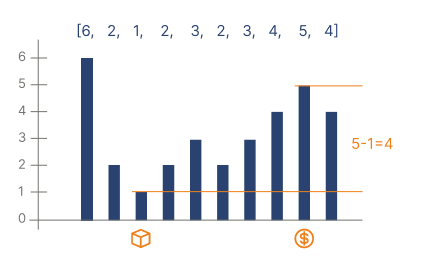
stock_profit([3, 1, 3, 4, 5, 1]) == 4
stock_profit([4, 3, 2, 1]) == 0
stock_profit([6, 2, 1, 2, 3, 2, 3, 4, 5, 4]) == 4
📖 ARTICLES
A generator, duck typing, and a branchless conditional walk into a bar -
What’s your favorite line of code? Rodrigo expounds about generators, duck typing, and branchless conditionals.
How Does Python’s OrderedDict Maintain Order? -
This article takes a closer look at the inner workings of OrderedDict and explains what it takes to implement an ordered dictionary in Python.
In this series, we don't just write code; we brew it. This is your personal workshop for mastering the magic of SQLAlchemy. We'll guide you from the core fundamentals to crafting complex queries and advanced data models. By the end, you'll have the confidence to solve any data challenge and build powerful, scalable applications.
👩💻CODE SHOT
What do you think the following code does?
def checkio(num: int):
    return (9, num%9)[bool(num%9)|(not num)]
🙌 Thanks for your attention! Hope to meet you at CheckiO, as well as at our Instagram and Twitter! We are really interested in your thoughts! Please, leave a comment below! ⤵
